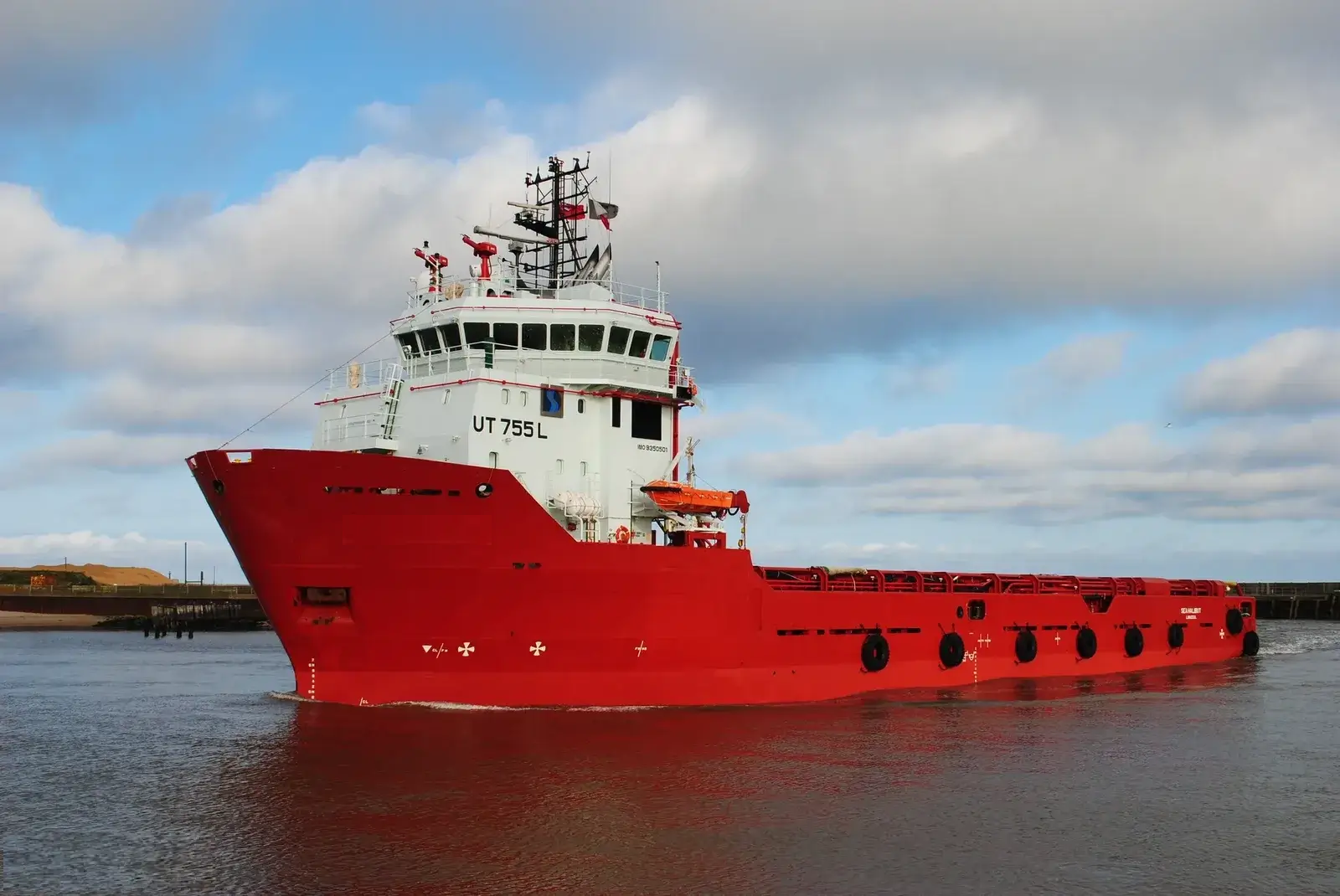
Location: -
Size: 3241DWT
Built Year: 2007
Price: $-
Location: -
Size: -
Built Year: 2010
Price: $-
Location: -
Size: -
Built Year: 2006
Price: $-
Location: -
Size: -
Built Year: 2026
Price: $-
Location: -
Size: -
Built Year: 2010
Price: $-
The global offshore vessel fleet is one of the most specialized, technically diverse, and strategically important segments of the entire international shipping industry. As of today, there are approximately 8,000 to 9,000 offshore support and specialized offshore vessels of various types actively operating across the world's oceans, serving the global oil and gas exploration and production industry, the rapidly expanding offshore wind energy sector, and a wide range of subsea construction, pipeline installation, and marine infrastructure development projects worldwide. These vessels form the essential operational backbone of the offshore energy industry — working around the clock in some of the world's most demanding and challenging marine environments to keep offshore platforms supplied, anchored, connected, and operational. The offshore vessel market represents one of the most dynamic, technically specialized, and commercially rewarding investment and operational sectors within the broader maritime industry — and it is a market that Ships24.net understands deeply, navigates with expertise, and serves with unmatched professionalism and dedication every single day.
The offshore vessel sale and purchase market is one of the most technically complex and commercially nuanced segments of the global secondhand ship market. Unlike conventional cargo vessels where primary specifications such as deadweight tonnage and cargo capacity largely define commercial value, offshore vessels are assessed across a far broader and more technically demanding range of parameters — including bollard pull capacity, dynamic positioning system capability, deck area and deck strength, crane lift capacity, firefighting ratings, diving support systems, accommodation capacity, and a host of other specialized equipment configurations that directly determine a vessel's operational capability and commercial earning potential in the offshore market.
Successfully navigating this complexity requires a brokerage partner with genuine hands-on knowledge of offshore vessel specifications, a deep understanding of the offshore energy market dynamics that drive demand for specific vessel types, and access to a truly global network of offshore vessel owners, operators, and buyers. Ships24.net brings all of these capabilities and more to every offshore vessel transaction we handle — giving our clients the market intelligence, technical knowledge, and professional brokerage support they need to make confident, well-informed, and commercially sound decisions in the offshore vessel sale and purchase market.
Anchor Handling Tug Supply Vessels (AHTS) For Sale are among the most powerful and versatile workhorses of the offshore industry. AHTS vessels are specifically designed to handle the anchors of mobile offshore drilling units (MODUs) including semi-submersible rigs and jack-up drilling rigs, and to provide general supply and towing services to offshore installations. AHTS vessels are rated primarily by their bollard pull capacity — measured in tonnes — which determines the size and weight of anchors and mooring systems they can handle.
Platform Supply Vessels (PSV) For Sale are the dedicated cargo carriers of the offshore world, designed to transport essential supplies, equipment, chemicals, drilling fluids, fuel, water, and bulk materials from shore bases to offshore oil and gas platforms and drilling rigs operating at sea.
Offshore Supply Vessels (OSV) For Sale represent the broader category of vessels providing general logistical support services to offshore oil and gas operations.
Tug For Sale — offshore and harbour tugs represent one of the most consistently active segments of the vessel sale market.
Offshore Support Vessels provide subsea operations, diving support, ROV work, and offshore construction support.
Dive Support Vessels are highly specialized offshore vessels equipped for deep-sea diving and subsea repair operations.
Construction Support Vessels are used for subsea construction, pipeline installation, and offshore infrastructure projects.
Pipe Laying Vessels install subsea pipelines connecting offshore fields to onshore facilities.
Cable Laying Vessels install subsea power and communication cables, especially for offshore wind farms.
Crane Vessels perform heavy offshore lifting operations including platform installation and subsea construction.
FPSO Units are floating production systems used for offshore oil extraction, processing, storage, and offloading.
Accommodation Vessels provide offshore living and workspace facilities for large crews working on offshore installations.
Service Operation Vessels and Crew Transfer Vessels support offshore wind farm construction and maintenance operations.
The global offshore vessel market has undergone a remarkable recovery driven by rising offshore oil and gas activity and rapid expansion of offshore wind energy projects worldwide. These combined forces are creating strong demand for AHTS, PSV, construction vessels, and wind support vessels.
Purchasing an offshore vessel is a complex and multi-stage process that requires careful planning, thorough technical due diligence, and skilled commercial management at every step. At Ships24.net, we guide our offshore vessel buyer clients through every stage of the acquisition process with the expertise, transparency, and personal dedication that every significant maritime investment deserves.
The offshore vessel buying process at Ships24.net begins with a detailed needs assessment in which our brokers work closely with the buyer to precisely define their operational requirements, target vessel specifications, budget parameters, preferred flag state, and investment timeline. Based on this assessment, our team conducts a comprehensive search of both publicly listed and off-market offshore vessel opportunities across our global network of owners and sellers — presenting the buyer with a carefully curated shortlist of suitable vessels accompanied by detailed technical summaries and our honest market assessment of each option.
Once a target vessel has been identified, Ships24.net coordinates a comprehensive pre-purchase inspection program involving experienced offshore marine surveyors, dynamic positioning system specialists, crane and deck machinery inspectors, and other technical experts as required by the specific vessel type and configuration. This inspection process is designed to provide the buyer with a complete and unbiased picture of the vessel's technical condition, operational capability, and regulatory compliance status before any purchase commitment is made.
Following a satisfactory inspection outcome, our brokers lead the commercial negotiation process on the buyer's behalf — leveraging our market knowledge and transactional experience to secure the best possible purchase price and terms. We then manage the complete documentation process including Memorandum of Agreement preparation, flag state registration and transfer, classification society notification, and all closing documentation — right through to final delivery and handover of the vessel.
There are several critically important factors that every prospective offshore vessel buyer must carefully evaluate before committing to any purchase. Ships24.net advises all offshore vessel buyers to give particular attention to the following key considerations.
Dynamic positioning system capability and certification is perhaps the single most commercially important technical specification of any offshore support vessel. DP class rating — ranging from DP1 through DP2 to the highest DP3 classification — directly determines which offshore contracts and operations the vessel is eligible to work on, and a higher DP class rating generally commands significantly higher day rates and broader charterer acceptance in the offshore market.
Bollard pull capacity for AHTS and tug vessels directly determines operational capability in anchor handling and towing assignments, and buyers should carefully verify bollard pull certification through the relevant classification society records rather than relying solely on owner-provided data.
Classification society status and the vessel's outstanding class recommendations and conditions are critical indicators of the vessel's regulatory compliance position and the potential capital expenditure required to bring it into fully clean class condition following purchase.
Drydock history and the timing of the next scheduled Special Survey and drydocking represent a significant financial consideration for any offshore vessel buyer, as drydock costs for complex offshore vessels can be substantial and must be factored carefully into the overall acquisition cost analysis.
Flag state selection impacts the vessel's operational flexibility, crewing requirements, port state control inspection record, and acceptance by offshore operators and oil company clients who maintain strict vessel vetting and approval standards.
Existing charter or contract status — whether the vessel is currently employed on a time charter, bareboat charter, or operating in the spot market — directly affects its commercial value and the buyer's ability to generate revenue from the asset immediately following acquisition.
When you choose Ships24.net as your offshore vessel brokerage partner, you are not simply engaging a transaction facilitator — you are gaining access to a team of experienced maritime professionals who bring genuine and deep offshore market expertise to every aspect of your buying or selling experience. Our brokers have personally handled offshore vessel transactions across every major producing basin in the world — from the North Sea and Gulf of Mexico to West Africa, the Middle East Gulf, Southeast Asia, and Australia — giving us firsthand knowledge of the regional market nuances, operator requirements, and regulatory frameworks that are critical to successful offshore vessel transactions in each geography.
Our relationships with the world's leading offshore vessel owners, operators, and charterers give our seller clients unparalleled market exposure and our buyer clients privileged access to the most attractive vessel opportunities available — including many that never reach the open market. Our technical advisory network — encompassing experienced offshore marine surveyors, DP system specialists, naval architects, and maritime lawyers — means our clients have access to the full spectrum of professional expertise required for even the most complex offshore vessel transaction, all coordinated and managed through a single trusted point of contact at Ships24.net.
AHTS stands for Anchor Handling Tug Supply vessel. An AHTS vessel performs three primary operational functions in the offshore industry. First and most distinctively, it handles the anchors of mobile offshore drilling units such as semi-submersible rigs and jack-up rigs — a highly skilled and physically demanding operation involving the deployment, repositioning, and recovery of very large and heavy mooring anchors and chains in open ocean conditions. Second, an AHTS vessel provides general towing services — towing drilling rigs, production barges, and other offshore units between locations. Third, it performs supply functions — carrying deck cargo, fuel, water, and liquid mud to offshore installations. The combination of these three capabilities makes the AHTS one of the most versatile and commercially valuable vessel types in the entire offshore support fleet, and AHTS vessels are consistently among the most actively traded assets in the offshore vessel sale market.
A Platform Supply Vessel (PSV) is a specific type of offshore support vessel purpose-designed to transport cargo, supplies, and materials from shore bases to offshore platforms and drilling rigs. The PSV's primary operational function is cargo carrying and it is optimized for this role with large open deck areas, substantial liquid cargo tank capacity, and specialized cargo handling systems. An Offshore Support Vessel (OSV) is a broader industry term that encompasses the entire category of vessels providing support services to offshore energy operations — including PSVs, AHTS vessels, multi-purpose support vessels, well intervention vessels, and other specialized offshore units. In practice, the term OSV is often used interchangeably with PSV in some markets, but strictly speaking PSV refers to a specific cargo-focused vessel type within the wider OSV category. Ships24.net deals in both PSVs and the full range of OSV types across all size categories and operational specifications.
Dynamic positioning (DP) is an automated computer-controlled system that uses a combination of propulsion thrusters, GPS positioning references, motion sensors, and environmental monitoring inputs to automatically maintain a vessel's position and heading at a fixed point in the water without the use of anchors. This capability is essential for offshore vessels conducting subsea construction, pipe laying, cable installation, diving support, and drilling support operations where precise and stable station keeping is required regardless of wind, current, and wave conditions. The International Marine Contractors Association (IMCA) defines three levels of DP capability — DP1, DP2, and DP3 — with increasing levels of system redundancy and reliability. Most modern offshore operators and oil company clients require a minimum of DP2 class rating for vessels working in close proximity to offshore installations, and DP3 is required for the most critical operations. DP class rating is therefore one of the most commercially significant specifications of any offshore vessel and has a direct and substantial impact on vessel value and day rate earning potential.
The appropriate bollard pull rating for an AHTS vessel purchase depends entirely on the intended operational deployment and the specific anchor handling requirements of your target charter market. Small AHTS vessels with bollard pull ratings below 80 tonnes are generally suited to shallow water jack-up rig anchor handling and general offshore towing in benign sea areas. Medium-sized AHTS vessels in the 100 to 180 tonne bollard pull range are the most versatile and widely deployed category — capable of serving a broad range of anchor handling and towing assignments across most operating environments. Large AHTS vessels with bollard pull ratings of 200 tonnes and above are required for deepwater semi-submersible rig anchor handling operations using very large and heavy mooring systems in harsh environmental conditions. Ultra-large AHTS vessels exceeding 300 tonnes bollard pull represent the highest specification tier of the market and command premium day rates in deepwater anchor handling assignments. Ships24.net provides detailed bollard pull analysis and market positioning guidance for all AHTS vessel transactions to ensure buyers select the most commercially optimal specification for their intended operation.
Offshore vessel valuation is a complex and multi-dimensional assessment that goes significantly beyond the simple age and size parameters that primarily drive conventional cargo vessel pricing. Key factors that influence offshore vessel values include vessel type and operational capability, DP class rating, bollard pull capacity for AHTS and tug vessels, deck area and cargo capacity for PSVs, crane lift capacity and reach, accommodation capacity, classification society status and survey history, age and remaining economic life, condition of key systems including main engines, thrusters, and dynamic positioning equipment, existing charter or contract status, flag state, and overall market supply and demand conditions in the relevant offshore vessel sector. Current market activity and recent comparable sales data are also critically important reference points in any offshore vessel valuation. Ships24.net provides comprehensive and data-driven offshore vessel valuations drawing on our deep market knowledge and access to current transaction data across all offshore vessel categories.
Offshore vessels operating in international waters are subject to a comprehensive framework of international maritime conventions and flag state regulations. Key regulatory instruments applicable to offshore vessels include the International Convention for the Safety of Life at Sea (SOLAS), the International Convention for the Prevention of Pollution from Ships (MARPOL), the Maritime Labour Convention (MLC 2006), the ISM Code covering safety management systems, the ISPS Code addressing security requirements, and specific offshore industry guidelines and recommended practices published by organizations such as IMCA, OCIMF, and the Oil and Gas UK Step Change in Safety initiative. Additionally, vessels operating in specific offshore regions may be subject to local flag state regulations and host country requirements imposed by national petroleum authorities. Ships24.net works closely with experienced maritime legal advisors to ensure full regulatory compliance guidance is provided to all clients in connection with every offshore vessel transaction.
The offshore vessel market has experienced a significant and sustained recovery following the prolonged downturn of 2015 to 2020 that resulted in widespread vessel scrapping, company restructurings, and a substantial reduction in the global offshore support fleet. The recovery has been driven by the combination of rising global oil and gas investment, constrained vessel supply resulting from years of minimal newbuilding activity, and the rapidly growing offshore wind energy sector creating entirely new demand streams for specialized offshore support vessels. Day rates for AHTS and PSV vessels have strengthened considerably across all major offshore operating regions, and vessel values have risen correspondingly. While market conditions are always subject to change and every investment decision must be carefully evaluated on its individual merits, the current offshore vessel market environment is broadly considered by industry analysts to represent a favorable window for well-informed buyers to acquire quality offshore tonnage at values that offer attractive long-term commercial potential. Ships24.net provides current market intelligence and investment analysis to assist all prospective offshore vessel buyers in making fully informed and well-timed acquisition decisions.
Selling your offshore vessel through Ships24.net is a straightforward, professionally managed, and completely confidential process designed to maximize the commercial outcome for vessel owners in any market condition. To initiate the sale process, simply contact our offshore brokerage team through the Ships24.net website and provide us with the key details of your vessel including type, size, age, classification status, current employment status, and your pricing expectations and sale timeline. Our brokers will conduct an immediate market appraisal drawing on current comparable sales data and our deep knowledge of the offshore vessel market to provide you with an honest and accurate assessment of your vessel's current market value. We will then develop and execute a targeted marketing and sale strategy — leveraging our global network of qualified offshore vessel buyers, our industry contacts across all major operating regions, and our established relationships with offshore operators, investors, and fleet managers worldwide — to connect your vessel with the most motivated and financially capable buyers available in the current market as efficiently and effectively as possible.
While offshore vessels represent one of our most active and technically specialized brokerage areas, Ships24.net operates as a truly comprehensive full-spectrum maritime brokerage house dealing in every vessel type actively traded in the global shipping market today. Our complete vessel portfolio covers Bulk Carriers, Crude Oil Tankers, Product Tankers, Chemical Tankers, LNG Carriers, LPG Carriers, Container Ships, General Cargo Vessels, RoRo Ships, Pure Car Carriers (PCC), Pure Car and Truck Carriers (PCTC), Heavy Lift Vessels, Multi-Purpose Cargo Ships, Crane Vessels, Pipe Laying Vessels, Cable Laying Ships, Dredgers, Hopper Barges, FPSO Units, Floating Storage Units (FSU), Floating Storage and Regasification Units (FSRU), Accommodation Vessels, Survey Ships, Fishing Vessels, Fish Factory Ships, Reefer Vessels, Livestock Carriers, Passenger Ships, Cruise Ships, Expedition Vessels, RoPax Ferries, Tugboats, Pilot Boats, Barges, Inland Waterway Vessels, Research Ships, Training Vessels, Ice Breakers, Super Yachts, and Harbor Craft. Whatever vessel type your business requires or your investment strategy demands, Ships24.net has the experience, the global network, the technical knowledge, and the professional commitment to deliver the right solution with the speed, transparency, and results-driven dedication that our clients across the globe have come to trust and rely upon. Visit ships24.net today and discover the difference that genuine maritime expertise makes in every vessel transaction.